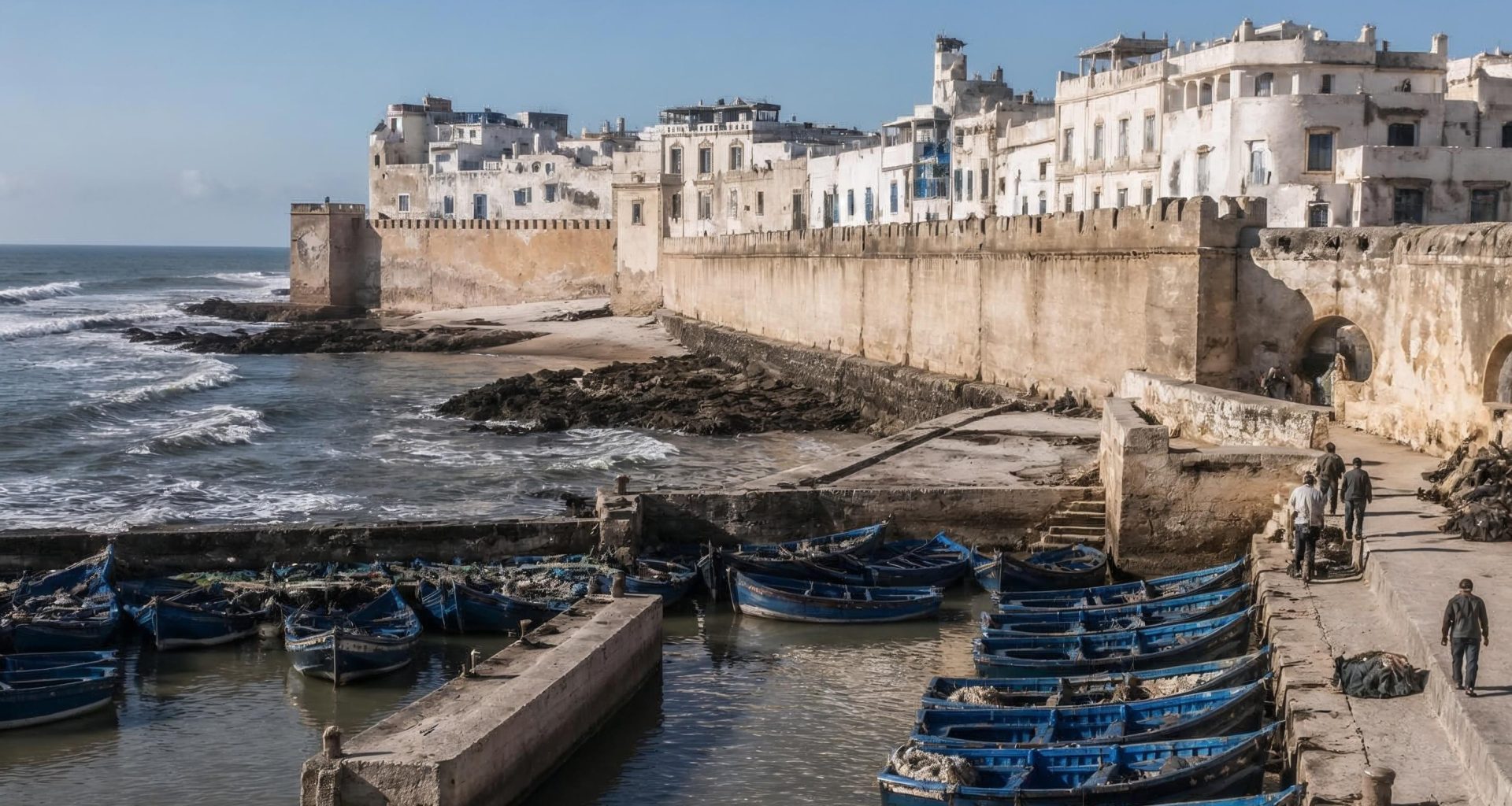
This Essaouira travel guide is for travelers who want a calmer Moroccan city without giving up history, good food or a lively local atmosphere. Essaouira is compact enough to explore on foot, its medina is easier to navigate than Marrakech or Fes, and the Atlantic wind gives the city a character that changes by the hour.
A first visit works well in two or three nights. That gives you time for the UNESCO-listed medina, the fishing port, the ramparts, a long beach walk and an unhurried meal without turning the trip into a checklist.
Why Essaouira Feels Different
Essaouira was developed in the eighteenth century as a fortified Atlantic port. UNESCO describes the medina as a strong example of European military planning adapted to a North African setting. Its history as a trading port also helps explain the mix of Amazigh, Arab, African, Jewish and European influences visible in the city.
For travelers, the practical difference is immediate: the medina is enclosed but relatively legible, traffic is limited inside its main lanes, and many essential places are within a short walk. It still functions as a neighborhood, market and working port, so visit with the same respect you would bring to any lived-in urban district.
How Long to Stay
| Time available | Realistic plan |
|---|---|
| One day | Medina, port, ramparts and one beach walk |
| Two nights | Add relaxed meals, galleries and time by the sea |
| Three nights | Add a nearby beach, countryside outing or surf lesson |
| Four nights or more | Best for slow travel, remote work or combining activities with rest |
The Medina and Ramparts
Start with a simple orientation walk. Enter through one of the main gates, identify the central avenues and note the direction of the sea. The medina contains workshops, food stalls, small hotels, galleries and homes. Side streets are rewarding, but there is no need to follow anyone offering an unsolicited shortcut.
The Sqala de la Kasbah and sea-facing ramparts provide the classic view of stone walls, blue boats and Atlantic water. Conditions can be windy and surfaces may be slippery after rain or sea spray. Keep loose hats and light objects secure.
Fishing Port and Seafood
Essaouira’s port is a working environment rather than a staged attraction. Boats unload fish, gulls gather around the docks and vendors prepare the day’s catch. Watch where you stand, avoid blocking workers and ask before photographing people at close range.
For seafood, agree on the price and what is included before the food is cooked. Ask whether bread, salad, drinks and preparation are separate. A busy stall is not automatically better; cleanliness, transparent pricing and careful cooking matter more.
Beach, Wind and Activities
The broad city beach is excellent for walking and watching the light change. Essaouira is famously windy, especially outside sheltered streets. That is good for windsurfing and kitesurfing but can make a beach afternoon feel cooler than the temperature suggests.
- Carry a light windproof layer even on a bright day.
- Use a qualified operator for water sports.
- Check sea conditions locally before swimming.
- Do not leave phones or bags unattended on the sand.
- Expect evenings to feel cooler than inland cities.
Where to Stay
Inside the medina, you are close to restaurants and evening walks, but luggage access may involve walking from a gate. Near the beach, access by car is easier and rooms may feel more open, although the atmosphere is less historic. Travelers with heavy luggage or limited mobility should ask the accommodation for the exact drop-off point, stair details and walking distance before booking.
Getting to Essaouira
Essaouira has no passenger railway station. Most independent travelers arrive by intercity coach, private transfer or rental car. Direct buses commonly connect the city with Marrakech, Agadir and Casablanca, but schedules and departure points change. Check the operator’s official booking page rather than relying on an old timetable in a blog post.
Read our Morocco bus guide before booking. If you drive, avoid planning an unfamiliar arrival deep into the medina: use an official parking area outside the walls and confirm the walking route to your accommodation.
When to Visit
Spring and autumn usually balance comfortable temperatures with manageable crowds. Summer attracts Moroccan holidaymakers and can be busy, but the Atlantic air is often cooler than Marrakech. Winter is quieter and can be beautiful, with a greater chance of rain, strong wind and chilly evenings. Use our Morocco seasonal guide to compare Essaouira with inland destinations.
Food Worth Trying
Fresh grilled fish is the obvious choice, but Essaouira also rewards slower meals: sardines, seafood tagines, harira, Moroccan salads, msemen and pastries. The local food scene ranges from simple counters to contemporary restaurants. Our Moroccan food guide explains common dishes and ordering habits.
Five Useful Darija Phrases
These phrases are written in Latin letters for quick reference. For human-recorded pronunciation and complete themed lessons, visit Speak Darija.
| English | Darija |
|---|---|
| Hello | Salam |
| How much is this? | Bshhal hada? |
| Where is the port? | Fin kayna l-mersa? |
| No, thank you | La, shukran |
| The bill, please | L-hsab, afak |
Common Mistakes
- Planning Essaouira as a rushed return day trip from Marrakech.
- Packing only for heat and underestimating wind.
- Assuming every seafood display uses one all-inclusive price.
- Treating the port as a photo set and obstructing workers.
- Booking a medina riad without checking luggage access.
PickYo’s Recommendation
Stay at least two nights, keep one half-day unscheduled and let the weather decide when you visit the beach or ramparts. Essaouira works best when it is used as a place to slow down, not as another list of attractions between Marrakech and the coast.
Related Morocco Guides
Information checked: 7 October 2026. Transport schedules, opening hours and access conditions can change; verify them with the operator or venue before travel.
Sources