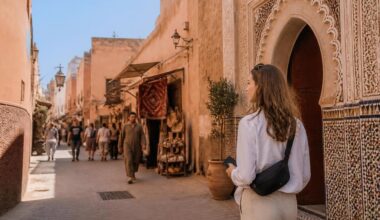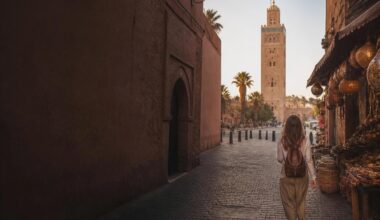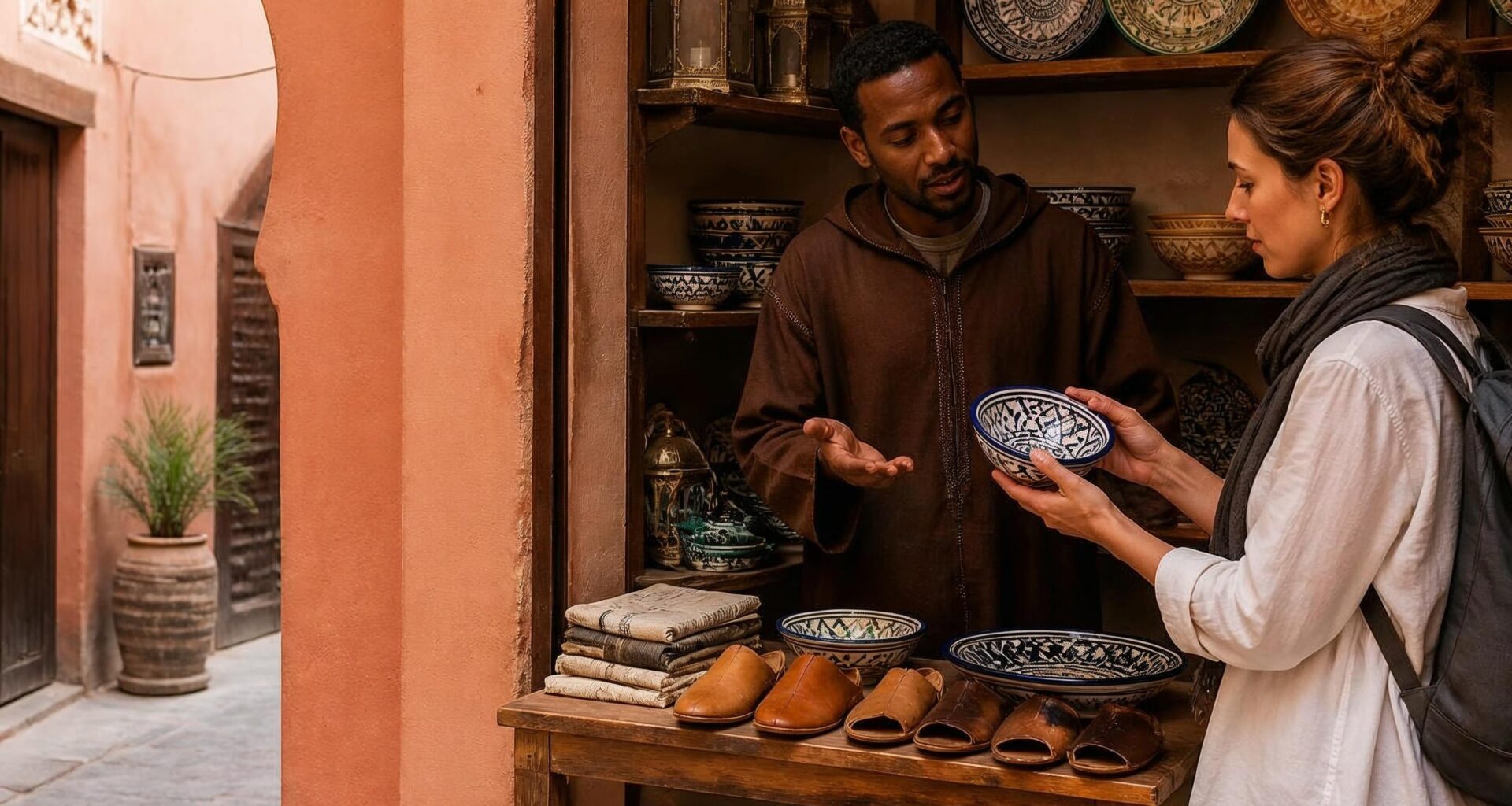
Morocco’s souks are not simply souvenir markets. They are working commercial districts where craftspeople, residents, wholesalers and visitors share the same narrow streets. Leather, lamps, ceramics, rugs, spices, clothing and household goods may be grouped by trade, especially in historic medinas.
For a first-time visitor, the color and energy are exciting, but prices and customs can feel unfamiliar. This Morocco souks guide explains how bargaining works, how to judge an item, how to avoid pressure and how to shop without turning every conversation into a contest.
What Is a Souk?
“Souk” means market. A souk may be a permanent network of shops inside a medina, a covered neighborhood market or a weekly rural market. Marrakech and Fes have famous historic souks, but every Moroccan city has places where local people shop.
Some areas specialize in one craft. You may move from metalworkers to leather sellers and then into lanes of textiles or spices. The boundaries are not always obvious, and getting temporarily lost is part of the experience.
Is Bargaining Expected?
Bargaining is common in traditional souks when prices are not displayed. It is not expected in supermarkets, pharmacies, modern boutiques, restaurants or shops with clearly fixed prices.
The first price is an invitation to discuss, not a personal insult. The final price should be acceptable to both sides. You are not obligated to buy simply because a seller has shown you several items, but once you make a firm offer and it is accepted, following through is good manners.
A Simple Bargaining Method
Start by deciding what the item is worth to you. Ask the price, respond calmly with a lower offer and move in small steps. Keep the conversation friendly.
Avoid claiming you saw an identical handmade item elsewhere unless that is true. Quality, size, material and workmanship can differ. If the price stays above your limit, thank the seller and leave politely. Sometimes you will be called back; sometimes you will not.
Never bargain for entertainment if you have no intention of buying. It wastes the seller’s time and creates unnecessary tension.
How Much Should You Offer?
There is no universal percentage. Advice telling every traveler to offer a fixed fraction ignores differences between products and shops. A mass-produced trinket, an antique textile and a handmade rug do not have the same margin.
Compare several shops before buying, especially for expensive items. Ask about material, origin, dimensions and production method. Your strongest position comes from information and a clear budget, not aggressive tactics.
What to Buy in Moroccan Souks
Ceramics
Moroccan ceramics vary by region and style. Check for chips, cracks and uneven bases. Decorative pottery may not be food-safe, so ask before using it for cooking or serving.
Rugs and Textiles
Rugs range from newly made cooperative pieces to vintage textiles and factory-produced designs. Ask about materials, dimensions, age and origin. Photograph the exact item and measurements before arranging shipping.
Leather Goods
Inspect stitching, zippers, lining and smell. Genuine leather is not automatically high quality, and strong odors may take time to fade. Keep light-colored leather away from moisture during travel.
Spices and Argan Oil
Buy edible products from clean, reputable sellers with good turnover. Decorative spice pyramids are not necessarily the product you will receive. Culinary argan oil and cosmetic argan oil are prepared differently; confirm which one you are buying.
Lanterns and Metalwork
Check sharp edges, wiring and the practicalities of using electrical fittings in your home country. A beautiful lantern may need professional rewiring.
Quality, Authenticity and “Cooperatives”
The word “cooperative” is sometimes used loosely in tourist areas. Do not assume that a shop supports artisans solely because a guide or driver uses that term. Ask specific questions and research major purchases independently.
For rugs, antiques, jewelry and high-value goods, request a detailed receipt. Be cautious with claims about age, rarity or protected materials. Customs rules in your home country may restrict certain animal products, plants or antiquities.
Handling Persistent Sellers
Most interactions remain friendly when you are clear. If you are not interested, say “la, shukran” — no, thank you — and keep moving. Long explanations can sound like an invitation to continue negotiating.
Do not accept unsolicited guiding through the medina if you do not want it. Someone who says a street is closed may be trying to redirect you to a shop. Check your map, look for official signs or ask a neutral business.
Read our guide to common Morocco scams for more situations and calm responses.
Paying in the Souks
Cash is the most dependable option in traditional markets. Some larger shops accept cards, but confirm the total and currency before entering a PIN. Keep small notes separate so you do not display all your cash.
ATMs can be found near major medinas, but it is better to withdraw before you become absorbed in shopping. For a complete payment guide, see Money in Morocco.
Shipping Purchases Home
For bulky or expensive items, get the shipping price, carrier, insurance terms and delivery estimate in writing. Photograph the item, receipt and packaging. Confirm who pays customs charges at the destination.
A verbal promise is difficult to enforce later. If a purchase is valuable, use a traceable payment method and a seller with verifiable contact details.
Photography and Respect
Ask before photographing shopkeepers, craftspeople or private interiors. A workshop is a place of work, not a stage. Some people welcome photos; others do not.
Do not block narrow passages while taking pictures. Step aside for residents, carts and delivery workers, particularly in the morning when the market is being supplied.
Five Useful Darija Phrases for the Souk
| English | Darija in Latin letters |
|---|---|
| How much is this? | Bsh7al hada? |
| That is too expensive. | Ghali bzaf. |
| Can you lower the price? | Tqder tnqes shwiya? |
| I am just looking. | Ghir kan-shuf. |
| No, thank you. | La, shukran. |
Practice pronunciation and complete shopping mini-dialogues in our free Darija souk phrases lesson with human-recorded audio.
Souk Etiquette in One Minute
- Greet the seller before asking questions
- Handle delicate objects only with permission
- Bargain where prices are not fixed
- Keep your tone warm and unhurried
- Make a firm offer only if you are ready to buy
- Ask before photographing people
- Check quality, dimensions and receipts
- Leave politely when the price is not right
Frequently Asked Questions
Are Morocco’s souks safe?
Major souks are generally busy public places. Watch your belongings, use a bag that closes securely and be cautious with unsolicited guides. At night, prefer well-lit routes and follow current local advice.
Are prices higher for tourists?
Opening prices may reflect an expectation of bargaining, and visitors may be quoted more than regular local customers. Comparing shops and deciding your maximum price reduces uncertainty.
Can I pay by card?
Some established shops accept cards, but cash remains common. Always check the final amount and currency on the terminal.
Should I hire a guide for the souks?
A licensed guide can add historical and craft context, especially in Fes. Agree on the tour scope and clarify whether shopping stops are included. You do not need a guide simply to browse.
What if I get lost?
Move toward a wider street or known landmark, use an offline map and ask a café, pharmacy or shop with a fixed location. Avoid handing your unlocked phone to a stranger.
Final Advice
The best souk experience comes from curiosity without urgency. Browse first, ask useful questions and buy only when the object and price both feel right. Friendly bargaining is part of the culture; pressure and discomfort do not have to be.
Information checked on 5 October 2026. Prices, payment methods and shop practices vary by city and seller.
Official Sources