Morocco is easier to enjoy when you understand a few practical details before arriving. The country has an established tourism infrastructure, but transport, medina navigation, money and everyday social interactions may work differently from what a first-time visitor expects.
These tips focus on decisions that prevent confusion. For route planning, destinations and trip length, begin with the complete Morocco Travel Guide.
1. Do Not Try to See the Whole Country in One Week
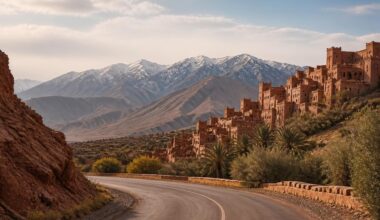
Morocco looks compact on a map, but the mountains and long distances between major stops make rushed itineraries exhausting. Marrakech, Fes, Chefchaouen, Essaouira and Merzouga do not form a quick circuit.
With seven days, choose one coherent route. Add the Sahara only when you accept the road time it requires. Ten days provide a more comfortable first-trip balance, while two weeks allow meaningful variety.
2. Check Entry Requirements With an Official Source
Visa rules depend on nationality, passport type and length of stay. They can also change.
Check the Moroccan diplomatic authority responsible for your country and the official Accès Maroc portal when an electronic visa or travel authorization may apply. Confirm passport validity and airline requirements before paying for non-refundable travel.
PickYo will never present one nationality’s rule as universal.
3. Choose Your Arrival Airport as Part of the Route
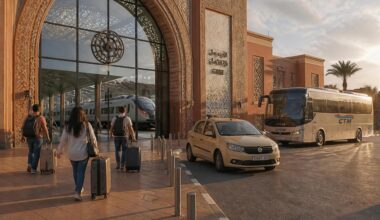
The cheapest flight does not always create the easiest trip. Casablanca offers the widest onward rail connections, Marrakech is convenient for southern itineraries, and Tangier works well for northern Morocco.
Before booking, compare:
- arrival time;
- immigration and baggage time;
- onward train or coach availability;
- distance to the first accommodation;
- the cost of an airport transfer;
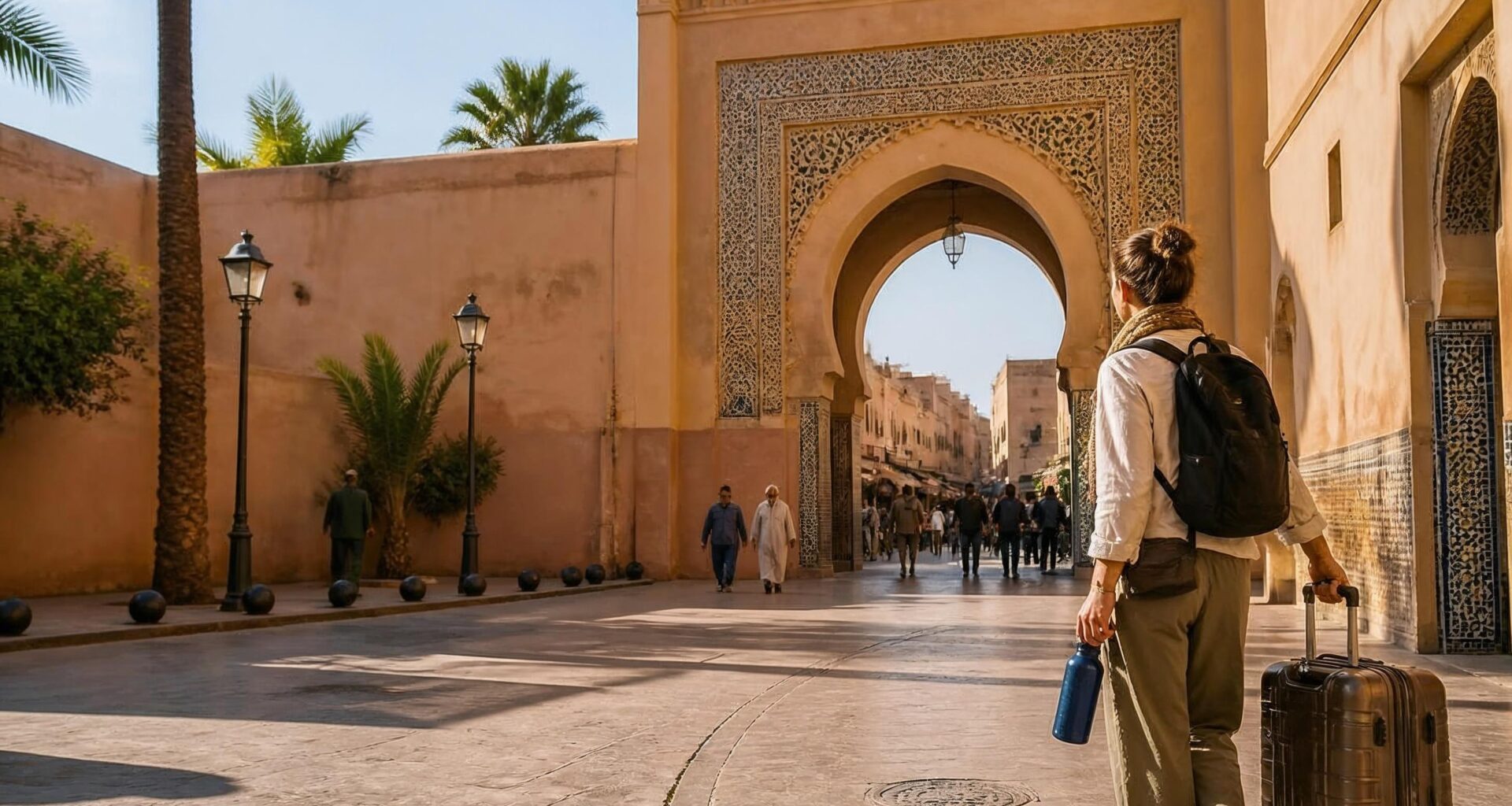
- whether the final medina section is walkable with luggage.
An open-jaw ticket—arriving in one city and leaving from another—can remove a full day of backtracking.
4. Book the First Night for the Arrival You Actually Have
A riad deep inside a medina may be memorable, but it is not automatically the easiest choice after a late flight. Ask whether a car reaches the door, where the driver stops and whether someone will meet you.
Save the address, phone number and meeting-point instructions offline. Riad names are often less useful to drivers than a recognized gate, square or road.
5. Learn the Difference Between a Petit Taxi and a Grand Taxi
Petit taxis operate within a city and have city-specific colors. Grand taxis travel on regional or intercity routes and may be shared.
The rules, meters and common practices vary by city, so avoid applying advice from Casablanca to Marrakech or Fes. Confirm the fare method before the vehicle moves and carry small notes.
The full Morocco Taxi Guide explains the differences without publishing a false nationwide fare.
6. Use Trains Where the Network Is Strong
ONCF trains are useful between Tangier, Rabat, Casablanca, Marrakech, Meknes and Fes. Al Boraq serves the high-speed Tangier–Kenitra–Rabat–Casablanca corridor.
The railway does not directly reach Agadir, Essaouira, Chefchaouen or Merzouga. These journeys need a coach, taxi or other road connection.
Use ONCF’s live journey planner for current schedules and prices. Do not build a connection from a timetable copied into an old article.
7. Keep Cash Even When You Have a Card
Cards are increasingly accepted at larger hotels, restaurants and formal shops, but cash remains essential for taxis, small cafés, markets, tips and many everyday purchases.
Withdraw or exchange money through an authorized channel. Keep smaller notes available and avoid carrying the entire trip budget in one place.
When an ATM or payment terminal offers to convert the amount into your home currency, compare carefully. Paying in Moroccan dirhams often allows your own bank or card network to perform the conversion instead of accepting the terminal’s displayed rate.
8. Keep Exchange Receipts
The Moroccan dirham is regulated, and rules apply to bringing currency in or taking it out. Use banks, authorized exchange offices, approved establishments or ATMs.
Keep exchange and withdrawal receipts, especially if you may need to convert remaining dirhams before departure. Check current limits with Morocco’s Office des Changes instead of trusting an old number in a blog post.
9. Carry Small Notes
Large notes create unnecessary problems in taxis, small shops and cafés. Break them at a supermarket, formal restaurant or other business capable of providing change.
Count change calmly before leaving. This is normal travel awareness, not a reason to treat every mistake as deliberate.
10. Ask Before Photographing People
The medinas are visually rich, but residents and workers are not scenery. Ask permission before taking a recognizable portrait, especially of artisans, performers and people in rural communities.
A refusal is complete and does not require negotiation. If someone clearly offers a staged photograph as a paid activity, agree on the amount before taking it.
Avoid photographing police, military facilities and sensitive infrastructure.
11. Dress for the Setting, Weather and Activity
Morocco contains beach towns, conservative villages, modern urban neighborhoods, mountain trails and luxury resorts. There is no single outfit rule for every location.
Lightweight clothing that covers shoulders and knees is a flexible starting point for medinas, rural areas and religious surroundings. Tourists are not generally expected to cover their hair, but access rules for religious sites must be respected.
Pack layers. Coastal evenings, air-conditioned trains, winter nights and mountain areas can feel much cooler than an image of the desert suggests.
12. Treat Friday and Ramadan as Planning Factors, Not Obstacles
Friday prayer can affect the rhythm of local businesses. Ramadan changes opening times, meal schedules, transport demand and the atmosphere after sunset.
Visitors can travel during Ramadan, but they should confirm current hours and behave considerately around people who are fasting. Do not assume that every restaurant is closed or that everything operates normally.
13. Navigate a Medina With Landmarks
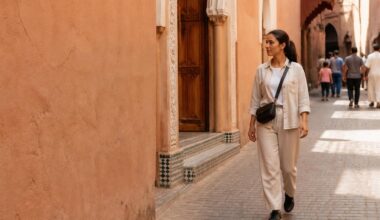
GPS can struggle in narrow covered lanes. Use a gate, mosque exterior, square, café or major street as a mental reference. Download the map offline, but do not follow it blindly through a lane that feels private or unsuitable.
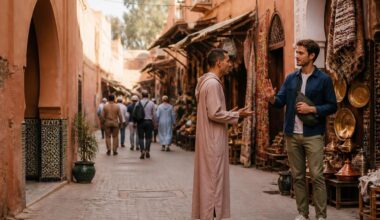
Ask shopkeepers, uniformed staff or your accommodation when uncertain. If someone offers to walk you to the destination, clarify whether the help is paid before following.
14. A Polite Greeting Improves Everyday Interactions
Beginning with “Salam” before asking a price or direction makes an interaction less abrupt. A few words of Darija are not necessary for travel, but they show respect and often make simple exchanges warmer.
Useful first phrases include:
| English | Darija in Latin letters |
|---|---|
| Hello | Salam |
| Thank you | Shukran |
| No, thank you | La, shukran |
| Excuse me | Smah liya |
| How much is this? | Bshhal hada? |
Want to hear the pronunciation and learn more phrases? Continue with Darija for Travelers for complete situation-based lessons with free human-recorded audio.
15. Bargaining Is a Conversation, Not a Battle
Negotiation is common for unpriced goods in many souks, but not for every purchase. Fixed-price stores, supermarkets, restaurants with menus and formal services are different.
Ask the price, decide what the item is worth to you and make a calm counteroffer. If the gap remains too large, say “La, shukran” and leave politely. Do not bargain for entertainment when you have no intention of buying.
For expensive crafts, compare quality and ask specific questions about materials, origin and production rather than focusing only on the final discount.
16. Clarify Unsolicited Help
Most everyday interactions are genuine, but assistance in highly touristed areas can turn into a request for payment. Before following a stranger, ask whether they are an official guide or whether a fee is expected.
You do not need to debate. A clear “No, thank you” and continued movement is often the most effective response.
If a lane is supposedly closed, pause and verify independently rather than immediately accepting a detour to a shop, tannery or cooperative.
17. Verify Guides and Activities
For complex medinas, mountain trips and specialized cultural visits, a good guide can add real value. Use a licensed or clearly verified professional, agree on the duration and price, and understand whether shopping stops are included.
PickYo does not sell tours, so recommendations will separate situations where a guide is useful from those where independent travel is straightforward.
18. Do Not Underestimate Heat, Sun or Altitude
Summer heat can make an ambitious afternoon plan unrealistic, particularly inland. Start early, schedule a slower middle of the day and carry water.
Mountain conditions can change quickly and winter travel may involve snow or road disruption. Desert nights can be cold outside summer. Check Morocco’s official weather service and local conditions close to departure.
19. Buy a SIM or eSIM Based on the Whole Route
Do not choose only from an airport sales pitch. Compare device compatibility, data allowance, activation process, validity and coverage in the regions you will visit.
An eSIM is convenient when the phone supports it and you want data immediately. A local physical SIM may offer better value or local calling. Download essential reservations and maps regardless, because coverage is never a substitute for offline preparation.
20. Leave Time Between Separate Tickets
A train ticket, coach booking and flight purchased separately do not create a protected connection. Leave margin for traffic, delays, finding the correct station and collecting luggage.
This matters particularly when transferring through Casablanca, continuing from a train to a coach, or leaving a medina property for an early departure.
21. Keep Plans Flexible Without Arriving Unprepared
The best balance is to reserve what can disrupt the whole trip and leave ordinary days flexible.
Book or verify early:
- international flights;
- the first accommodation;
- important intercity journeys;
- limited-entry attractions;
- a desert stay when dates are fixed;
- the final night before an early departure.
Leave room for:
- a slower morning;
- an unexpected conversation;
- weather changes;
- a market visit;
- returning to a place you enjoyed.
First-Trip Checklist
Before booking
- choose a realistic region and route;
- verify entry requirements;
- compare arrival and departure airports;
- estimate road time, not only distance;
- understand which destinations have train service.
Before departure
- save accommodation access instructions offline;
- download tickets and maps;
- notify the bank if required;
- pack a backup payment method;
- check weather for every region;
- learn five Darija phrases;
- keep travel insurance and emergency details accessible.
After arrival
- obtain small dirham notes;
- confirm the fare method before a taxi ride;
- identify the nearest reliable landmark;
- verify the next major journey on the official operator’s site;
- slow the first day down.
PickYo’s Recommendation
Plan fewer places, understand the transport between them and keep enough flexibility to enjoy the country beyond a checklist. Most first-trip problems are not dramatic; they come from rushed routes, unclear prices, poor arrival instructions or assumptions that every service works as it does at home.
A little preparation removes those problems without removing the spontaneity that makes Morocco memorable.
Continue Planning
- Morocco Travel Guide
- Getting Around Morocco
- Morocco Train Guide
- Morocco Taxi Guide
- Money in Morocco
- Common Morocco Scams
- Darija for Travelers
Practical information last checked: 5 October 2026. Entry rules, transport schedules and currency regulations can change; verify them through the official links below before traveling.
Official Sources