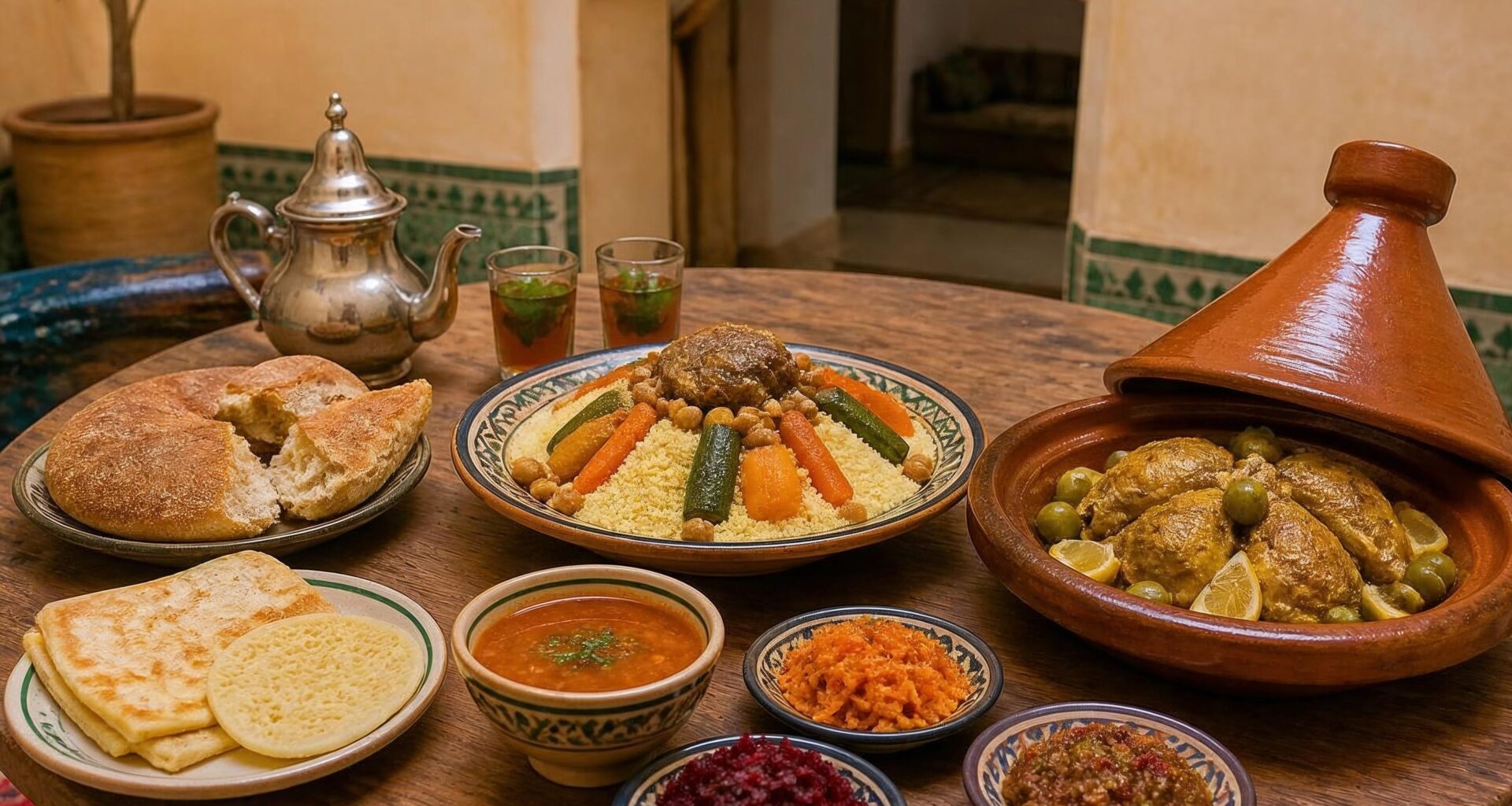
Moroccan food is one of the most memorable parts of a trip. Meals combine Amazigh, Arab, Andalusian, African, Mediterranean and regional traditions, but the experience is not limited to tagine and couscous. Breakfasts, bakery counters, market stalls, family-style lunches and cups of mint tea all reveal a different side of daily life.
This Moroccan food guide explains the dishes worth recognizing, how and when they are usually eaten, what vegetarians can order, and the practical habits that make eating in Morocco easier.
The Dishes Most Travelers Should Try
Tagine
A tagine is both the conical clay cooking vessel and the slow-cooked dish prepared inside it. Common versions include chicken with preserved lemon and olives, beef or lamb with prunes, kefta meatballs with tomato and eggs, and seasonal vegetables.
Not every restaurant cooks each tagine to order; traditional slow cooking takes time. A bubbling pot arriving in minutes may have been prepared earlier and reheated, which is normal in busy restaurants.
Couscous
Moroccan couscous is traditionally associated with Friday lunch. Fine steamed grains are served with vegetables, broth and sometimes meat. It is filling and often designed for sharing.
Availability varies by restaurant and day. If couscous is important to you, ask whether it is served before choosing your table.
Pastilla
Pastilla is a crisp layered pastry balancing savory and sweet flavors. The classic festive version is often made with poultry, almonds, cinnamon and sugar. Seafood pastilla is also popular, especially in coastal cities.
Because ingredients vary, travelers with allergies should never assume that a savory pastry is free from nuts, eggs or seafood.
Harira
Harira is a tomato-based soup commonly made with lentils, chickpeas, herbs and sometimes meat. It is closely associated with breaking the fast during Ramadan, but many restaurants serve it throughout the year.
Tanjia
Tanjia Marrakchia is a Marrakech specialty: seasoned meat cooked slowly in a clay jar. It is different from tagine and is particularly associated with the city’s traditional food culture.
Rfissa
Rfissa combines shredded msemen-style bread, lentils, onions, fragrant spices and chicken. It is rich, comforting and more commonly encountered in homes or specialist restaurants than on every tourist menu.
Moroccan Breakfast
A Moroccan breakfast may include msemen, baghrir, bread, olive oil, honey, jam, cheese, eggs, olives, coffee, tea or fresh orange juice.
Msemen is a layered square flatbread with crisp edges. Baghrir is a light, spongy pancake covered in small holes and often served with butter and honey. Amlou, made with almonds, argan oil and honey, is delicious but unsuitable for people with nut allergies.
Breakfast is one of the easiest ways to sample several foods without ordering a large meal.
Street Food and Market Snacks
Street food can be excellent when you choose busy stalls where ingredients turn over quickly. Popular options include grilled meats, sardines in coastal towns, maakouda potato cakes, snails, soups, sandwiches and fresh juices.
Use the same judgment you would anywhere: look for clean utensils, food cooked thoroughly in front of you and ingredients protected from prolonged heat. If your stomach is sensitive, begin with freshly cooked foods rather than raw salads or sauces that have been standing outside.
At Marrakech’s Jemaa el-Fna, compare menus and prices before sitting down. Confirm what is included and check the bill before paying.
Vegetarian and Vegan Food in Morocco
Vegetarian meals are widely available, but the word “vegetable” does not always guarantee that a dish contains no meat stock. Ask clearly. A vegetable tagine, Moroccan salads, lentil soup, beans, zaalouk, bread, olives and couscous can create an excellent meal.
Vegans should check for butter, eggs and honey, particularly in breakfast foods and pastries. If you have strict dietary requirements, keep a translated note on your phone.
Food Allergies
Travelers with allergies need to be specific. Almonds, peanuts, sesame, eggs, dairy, gluten and seafood can appear in sauces, pastries and garnishes. Cross-contact may be difficult to avoid in small kitchens.
Do not rely only on the appearance of a dish. Show a written allergy card, confirm the ingredient more than once and carry any prescribed medication. For more help, use our Darija for travelers hub and the dedicated allergy lesson when it becomes available.
Tea, Coffee and Drinks
Mint tea is a symbol of hospitality and is often sweet. You can ask for less sugar, although the tea may already have been prepared. Coffee ranges from espresso to café au lait. Fresh orange juice is widely available in tourist areas and markets.
Alcohol is available in some licensed hotels, restaurants, bars and shops, but not everywhere. Drink discreetly and never consume alcohol in public streets. During Ramadan, availability and opening hours may change.
Bread, Shared Dishes and Table Manners
Bread is central to many Moroccan meals and may be used to pick up food from a shared dish. Eat from the section directly in front of you rather than reaching across the plate.
The right hand is traditionally used for eating and passing food. Restaurants serving tourists provide cutlery, so follow whichever method feels comfortable and appropriate to the setting.
Accepting tea or tasting a shared dish is a warm way to participate, but you can politely decline if you have dietary concerns.
How Much Should You Order?
Portions can be generous. Two people may prefer to share starters and order one main course each, then adjust. Moroccan salads often arrive as several small cooked and raw dishes rather than one leafy salad.
Ask whether bread, olives or small plates are complimentary. In some restaurants they are included; in others they appear on the bill.
Tipping in Restaurants
Check whether service is included. If it is not, leaving a modest tip for good service is appreciated. Keep small notes and coins because card machines do not always provide a simple tipping option.
For payment advice, read Money in Morocco: cash, cards and ATMs.
Five Useful Darija Phrases for Restaurants
| English | Darija in Latin letters |
|---|---|
| I would like this, please. | Bghit hada, 3afak. |
| I do not eat meat. | Ma kanakulsh l7em. |
| Does this contain nuts? | Wash fih l-kawkaw? |
| Not spicy, please. | Bla 7ar, 3afak. |
| The bill, please. | L7sab, 3afak. |
Hear the pronunciation and practice complete mini-dialogues in our free Darija restaurant phrases lesson with human-recorded audio.
Where to Eat in Morocco
Mix different settings rather than eating only in hotel restaurants. Try a neighborhood bakery, a busy lunch restaurant, a market stall with strong turnover and a more polished dinner venue.
In Marrakech, combine medina food with at least one meal in Gueliz or another modern neighborhood. In Fes, traditional dishes and elaborate riad dining are highlights. Coastal cities such as Essaouira are natural choices for seafood, while regional specialties reward curiosity wherever you travel.
A First-Timer’s Food Checklist
- Try one tagine and one Friday couscous
- Order a selection of Moroccan salads
- Taste msemen or baghrir at breakfast
- Drink mint tea at least once
- Ask about a regional specialty
- Carry a written allergy card if needed
- Confirm prices and inclusions before ordering at market stalls
- Keep small cash for simple cafés and tips
Frequently Asked Questions
Is Moroccan food spicy?
Moroccan food is usually aromatic rather than intensely hot. Cumin, ginger, turmeric, cinnamon, paprika, saffron and herbs create flavor. Harissa or hot sauce may be served separately.
Can vegetarians eat well in Morocco?
Yes, but confirm that vegetable dishes do not contain meat stock. Large cities and tourist areas have growing vegetarian and vegan options.
Is tap water safe to drink?
Visitors commonly choose sealed bottled or properly filtered water, especially if their stomach is not accustomed to local water. Reduce plastic by refilling from a trusted filtered source when your accommodation provides one.
Do I need restaurant reservations?
Casual cafés rarely require them. Popular riad restaurants and fine-dining venues may book out, particularly on weekends or during busy travel periods.
Final Advice
The best way to understand Moroccan food is to eat beyond a single famous dish. Try breakfasts, soups, salads, street snacks and regional specialties, and ask simple questions before ordering. A little Darija makes the experience warmer and helps you communicate dietary needs.
Information checked on 5 October 2026. Menus, prices and opening times change, especially during Ramadan and public holidays.
Official Sources